Introduction
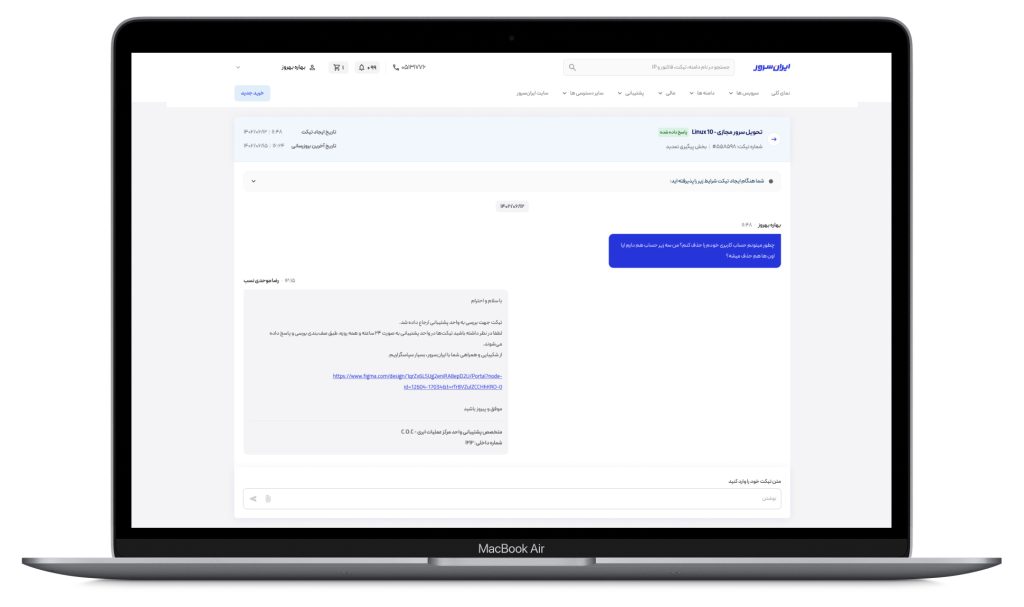
The ticket and support system is a critical component of any organization, as it directly interacts with customers and can significantly impact customer satisfaction or dissatisfaction. In this case study, we will explore improvements to the ticket reply process.
Following the improvements made to the ticket creation process, we turned our attention to enhancing the reply and response page. One notable absence in this page was a module for collecting direct feedback from users. Given the high volume of tickets at Iranserver, this option could provide a valuable solution for better monitoring and understanding of user needs.
.
My Role
As a designer in this project, my role was to optimize workflows to create a better user experience and drive significant improvements.
.
Method and Framework
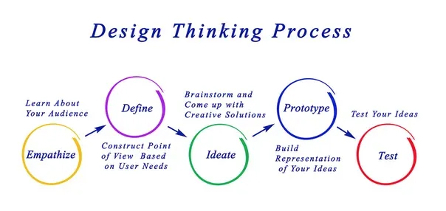
In this process, I employed the Design Thinking methodology, which comprises five stages and has been instrumental in identifying and resolving user problems.
Stakeholders
- Product Team: Identifies user needs, prioritizes features, and sets the overall direction of the product.
- Support Team, Call Center, Quality Assurance: Directly interacts with users, identifies their problems, and provides valuable feedback.
.
Phase 1: Empathy and Needs Assessment
To understand the needs, I held a meeting with the product, support, call center, and quality control team managers. (In the first phase, we addressed clear and obvious needs to establish a suitable foundation, allowing us to focus on addressing direct user needs in subsequent phases).
1. They needed a way to better evaluate their support agents and define KPIs for them.
2. Another requirement was to understand whether users’ issues were resolved within their tickets.
3. If the number of tickets increased, users should have the ability to register their complaints.
4. If a problem arose within a ticket, it should be easily escalated to quality control.
After the meeting, we reviewed this list and divided it into different phases for development in future sprints.
.
Stage 2: Defining and Identifying Problems Based on Needs
After compiling the list of needs, we searched for problems within the product that contradicted these needs. In this stage, I delved deeper into this process to identify problems whose improvement would address the needs identified in the previous stage and contribute to process improvement.
Identified Problems
The following list represents areas that ideally should be improved in the first phase:
• Lack of a feedback system (the main problem)
Other problems discovered during this investigation:
- 1. Outdated design
- Lack of synchronization with the new UI kit
- Lack of synchronization of this page with chat platforms
- Excessive alerts
- Inadequate color contrast on this page, considering customer tickets from users with color blindness or inadequate monitors.
- The appearance of the attached file was unsuitable and not clearly visible.
We realized that by addressing these problems, we could take a significant step towards improving our system and product. Therefore, we tried to brainstorm solutions to resolve these issues.
.
Stage 3: Ideation
Considering the development time and the number of personnel available to address the issues, we defined several phases. In the first phase, we addressed the following solutions derived from brainstorming sessions and competitor analysis:
- Developing a feedback module with a specific structure.
- Creating a scenario for how this module would function.
- Examining feedback modules and obtaining feedback from similar services like Snapp, which closely resembled our desired outcome.
We presented the derived solutions to project stakeholders through Hi-Fi wireframes in a meeting. We successfully gained their approval, and the decision was made to focus solely on improving the aforementioned items in this phase.
The metrics and objectives we considered for this improvement were:
- Receiving user feedback
- Monitoring users
- Evaluating support staff performance based on this feedback
Following the approval of the wireframes and the establishment of metrics for measuring product success, prototypes were prepared for the final presentation to stakeholders and ultimately handed off to the developers.
.
Stage 4: Prototype
In this stage, to achieve the best view for the ticket, a complete prototype was designed:
- The desired component was designed
- It was connected to the UI Kit, and all its components and elements were updated
- Mobile and tablet designs were created according to the documented standards in the UI Kit
After handing off to the developer and developing this feature, after some time, using tools like Clarity, we examined the metrics defined in the previous stage to test the released product for future improvements.
.
Phase Five: Testing
Given that this feature has not yet been developed, this section does not have any specific data.